
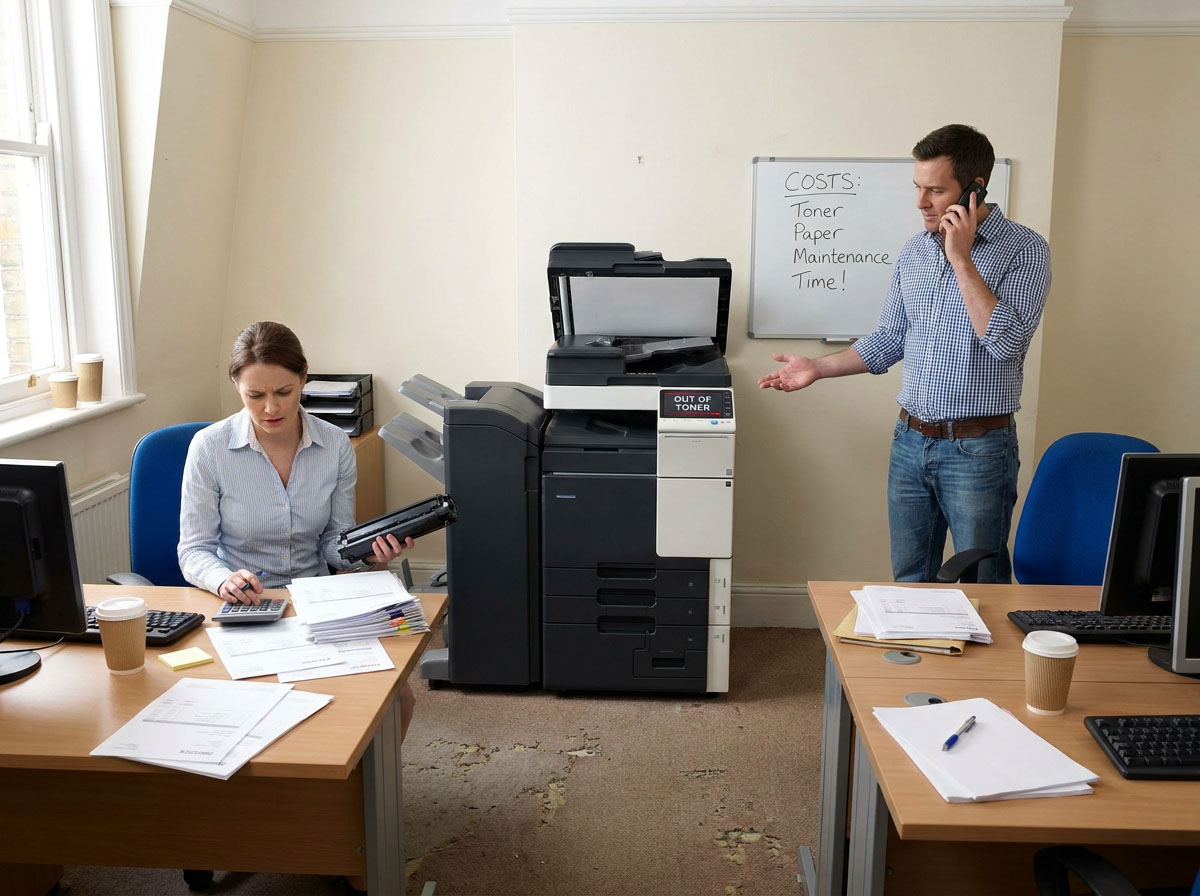
If you’re a small business trying to get your printing under control, the first question is almost always about money: what do managed print services actually cost?
Here’s the honest short answer. Most managed print services (MPS) in Australia are priced on a per-page basis — commonly around 1 to 5 cents per black-and-white page and 8 to 20 cents per colour page — usually bundled with your equipment and support into a single predictable monthly bill. What your business actually pays depends on how much you print, what mix of colour and black-and-white, how many devices you have, and the service level you need. Those are typical Australian market ranges, not a quote — but this guide explains exactly how MPS is priced, what drives the number up or down, and how to work out a realistic figure for your business.

How are managed print services priced?
Unlike buying a printer outright, MPS rolls your hardware, toner, maintenance, support and monitoring into one ongoing agreement. There are three common ways providers structure that cost.
- Cost per page (the most common model). You pay a set rate for every page you print — often called a “click charge.” Black-and-white pages are cheapest; colour costs more because of the toner involved. This model is popular with small businesses because it’s simple to budget and you largely pay for what you actually use. Many agreements include a monthly page allowance with a small additional charge for anything over it.
- Cost per device. Each printer or multifunction device carries a fixed monthly price that covers all its supplies and support. This suits businesses with predictable, steady printing across a known number of machines.
- Cost per user. You pay a flat monthly amount per employee rather than per page or per device. This can work well for teams whose printing is fairly consistent from person to person.
Most Australian SMBs end up on a per-page or bundled per-device arrangement, often combined with an equipment lease so there’s no large upfront purchase. The equipment itself is typically leased over a three-to-five-year term, with the lease and the per-page service charge appearing as one manageable monthly cost.
What does that work out, to for a small business?
The per-page rates above are the building blocks, so your total comes down to volume. As a rough guide, typical Australian per-page ranges sit at around half a cent to 5 cents for black-and-white and 5–20 cents for colour, with A3 laser photocopiers at the lower end and higher-volume agreements driving rates down further.
To put that in perspective: industry research has long suggested that uncontrolled printing can quietly consume as much as 3% of a company’s annual revenue, and that the average office employee’s printing costs a business in the region of $725 a year. For a small team, that adds up fast — which is exactly the waste a well-structured MPS agreement is designed to remove.
The key point for budgeting: a small business with light printing and one or two devices sits at the lower end of any total, while a busier office with heavy colour use and several machines sits higher. The only way to land on an exact figure is a print assessment that looks at your actual page counts and devices — more on that below.
What makes managed print cost more or less?
Two businesses of the same size can pay very different amounts. Here’s what actually moves the number.
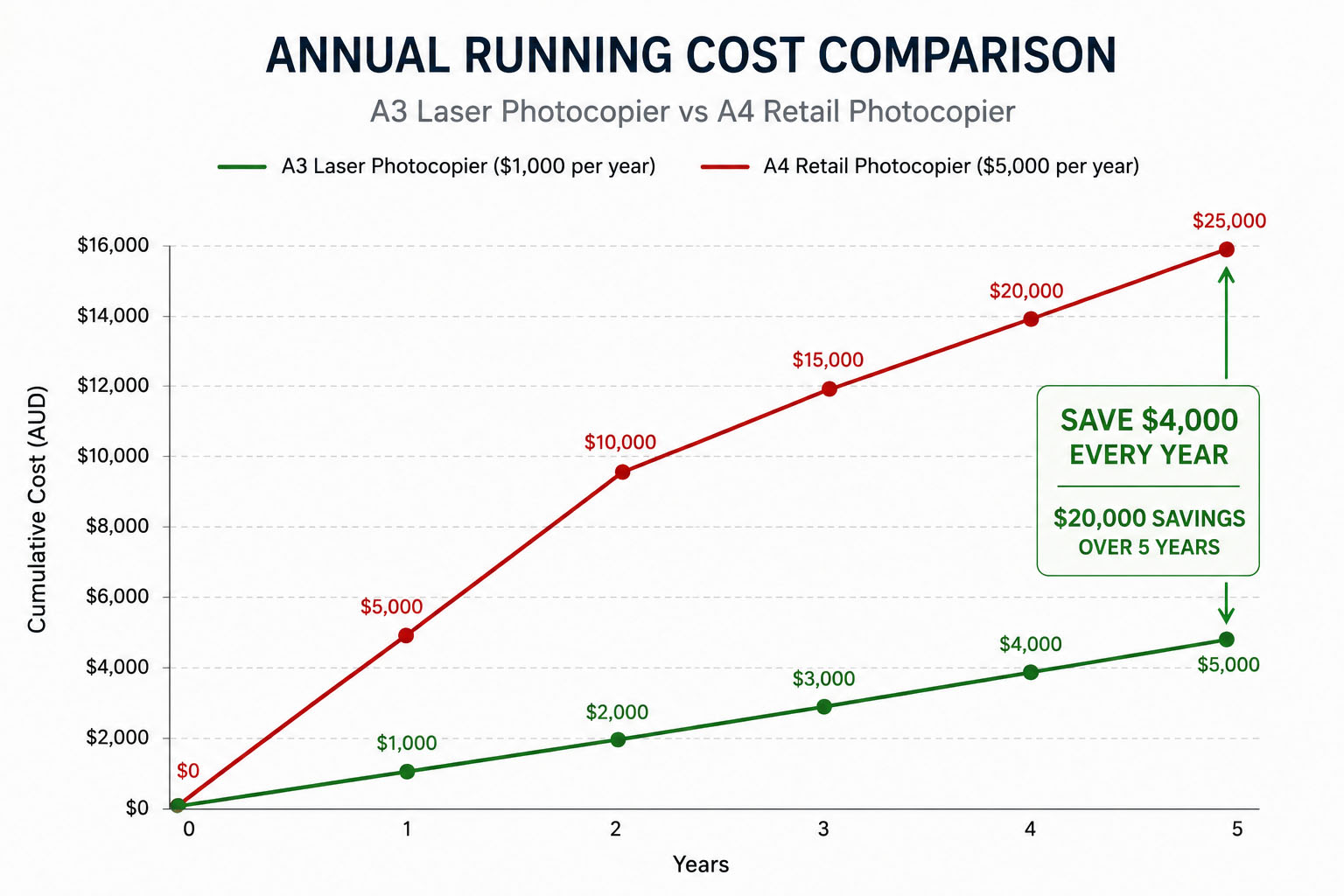
Size of the machine. The biggest single factor. The bigger the machine and the more you invest, the cheaper it is to run which leads to an overall lower total cost of ownership. Retail photocopiers are cheap, small and cost a fortune to run.
Colour vs black-and-white. Colour pages cost several times more than black-and-white. A business printing lots of colour marketing material will pay more per page than one printing mostly text documents.
Number and type of devices. More devices, and more feature-rich multifunction machines (print, scan, copy, fax), cost more to include than a couple of basic printers. Part of a good MPS review is checking you’re not running more machines than you need.
Service level. Faster response times, on-site support and proactive monitoring add value but can affect cost. A genuine advantage of a local provider is that support is handled nearby rather than offshore, which matters when a device goes down mid-workday.
Included extras. Features like automated toner re-ordering, cloud print management and fleet monitoring may be bundled in or priced separately. These often save money overall by preventing emergency toner runs and flagging issues before they become downtime.
Is managed print actually cheaper than what we do now?
For most small businesses that currently buy printers and toner ad hoc, the answer is usually yes — once the hidden costs are counted.
Buying cartridges retail as you run out, losing staff time to paper jams and error codes, paying for emergency call-outs, and running an inefficient mix of devices all add up to far more than most businesses realise, because it’s spread across many small invoices rather than one line item. MPS consolidates that into a single predictable monthly cost, and the print assessment usually surfaces savings — fewer or better-placed devices, lower toner spend through automated supply, and less downtime. The value isn’t only the per-page rate; it’s removing the day-to-day cost and hassle of managing print yourself, which is exactly what small businesses tell us they want back.
How to get an accurate price for your business
Because MPS is priced on your actual usage, a real quote starts with a print assessment — a provider reviews your current devices, page volumes and colour mix, then recommends a device fleet and pricing model to match. A good assessment should give you:
- A clear picture of what you’re spending on print now (most businesses underestimate it).
- A recommended setup with the right number and type of devices — not more than you need.
- A transparent per-page or per-device rate with the page allowance spelled out.
- The full monthly figure, including lease and service, with no surprises.
Frequently asked questions
How much do managed print services cost for a small business in Australia?
MPS is usually priced per page, with typical Australian rates around half a cent to 5 cents per black-and-white page and 5–20 cents per colour page, bundled with equipment and support into one monthly cost. Your total depends on print volume, colour usage, number of devices and service level. A small business with light printing and one or two devices sits at the lower end; a busier office with heavy colour use sits higher. The exact figure comes from a print assessment of your actual usage.
What’s included in a managed print services cost?
A typical MPS agreement bundles the hardware (often leased), toner and supplies, maintenance and repairs, technical support, and monitoring software into one ongoing charge. Many include automated toner re-ordering and cloud print management. Paper is usually the main thing not included. The benefit is a single predictable bill instead of many separate, unpredictable printing expenses.
Which MPS pricing model is best for a small business?
Cost-per-page is the most popular for SMBs because it’s simple to budget and you largely pay for what you use. Cost-per-device suits businesses with steady, predictable printing across a set number of machines or locations, and cost-per-user suits teams with consistent printing per person. The best fit depends on your printing patterns — a print assessment will identify which model is most cost-effective for you.
Does managed print save money compared to buying our own printers?
For most small businesses, yes. Buying toner retail, losing staff time to jams and downtime, and running an inefficient set of devices usually costs more than businesses realise because it’s spread across many invoices. MPS consolidates this into one predictable cost and typically reduces total spend through better device placement, automated supplies and less downtime.
Do I need a long contract for managed print services?
Most MPS agreements run alongside an equipment lease, commonly over three to five years, which is what allows the cost to be spread into a manageable monthly figure rather than a large upfront purchase. Terms vary by provider, so it’s worth asking about contract length, what happens at the end of the term, and how the agreement scales if your business grows.
Get an accurate quote for your business
The ranges above tell you what’s typical in Australia, but managed print is always priced on your actual usage — so the only way to know your real cost is a proper look at how your business prints. QPC Group offers a free print assessment: we review your current devices and volumes, then build a tailored solution with transparent pricing and local Australian support, so there are no surprises.
Book your free print assessment and quote — get in touch with QPC Group or call our WA team on (08) 9303 3888. You’ll know exactly what it costs before you commit to anything.
Prices in this guide are typical Australian market ranges current at the time of writing and are provided as a general guide only — they are not a quote. Actual costs depend on your print volume, devices and service requirements. Contact a managed print provider for a tailored quote.